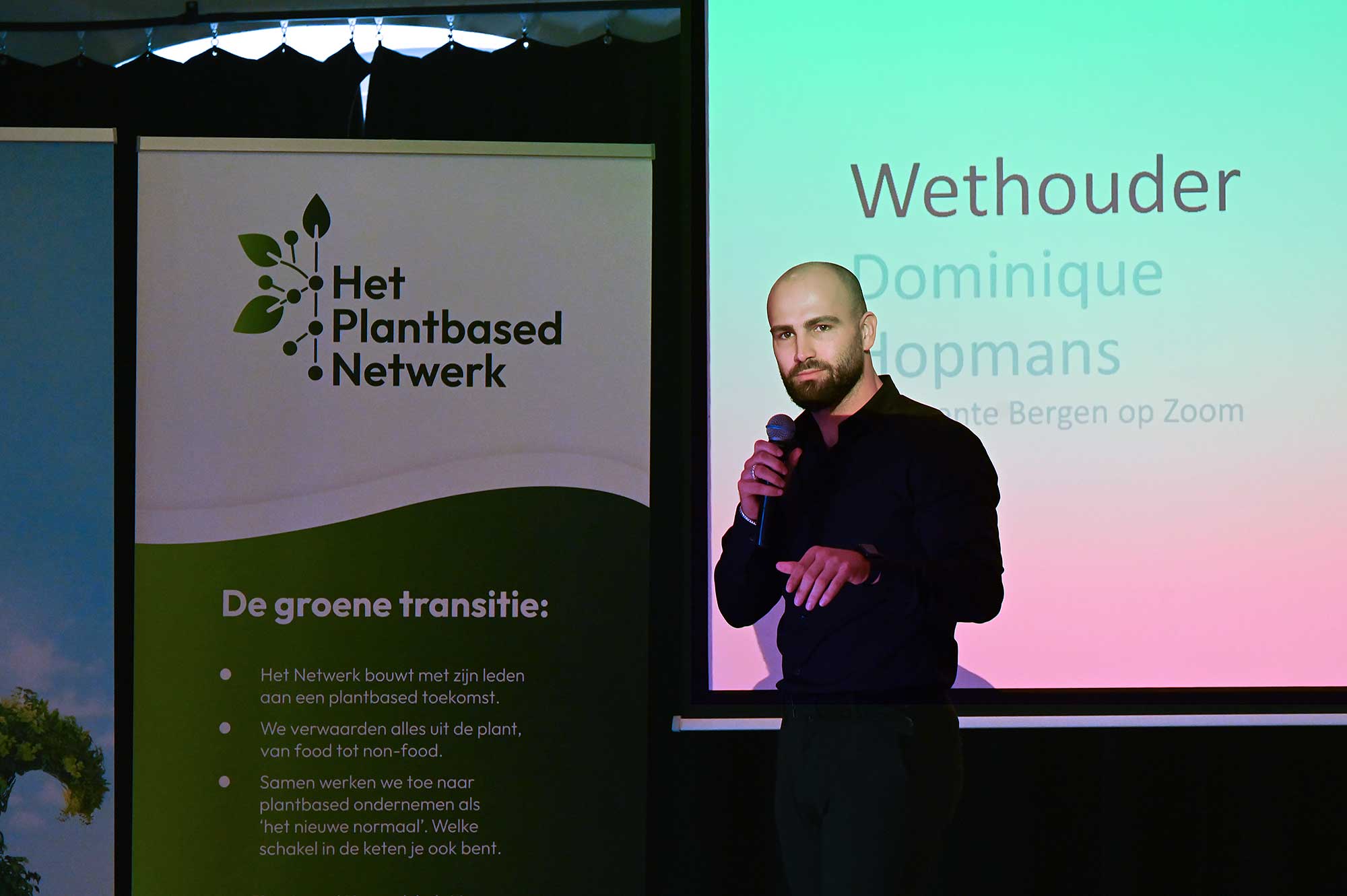
Dominique is alderman for Economy in that municipality, but also figurehead of the Plantbased Network in the West Brabant region. ‘We are now really coming up with concrete innovations, with which we can solve major social problems,’ he said.
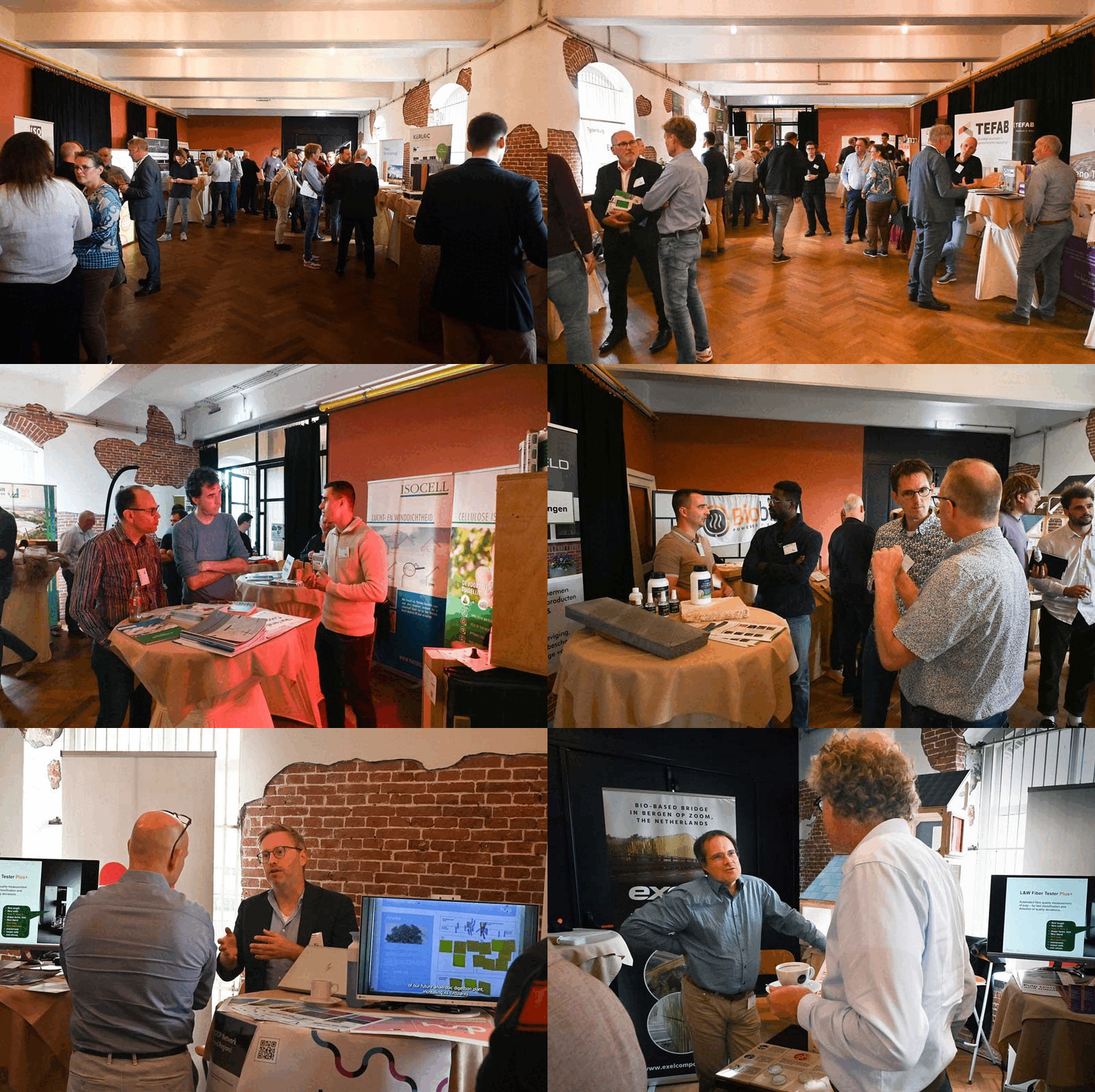
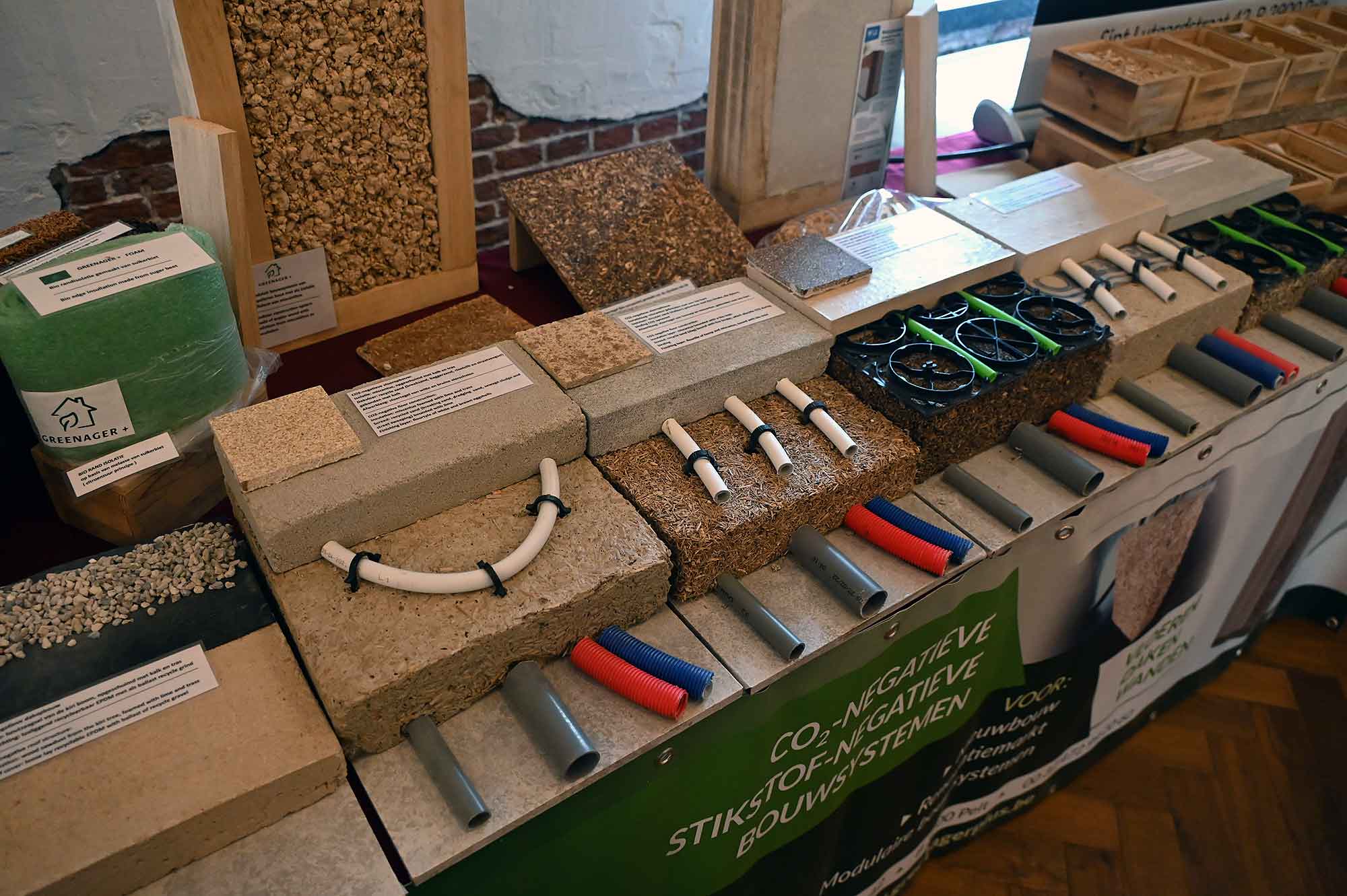
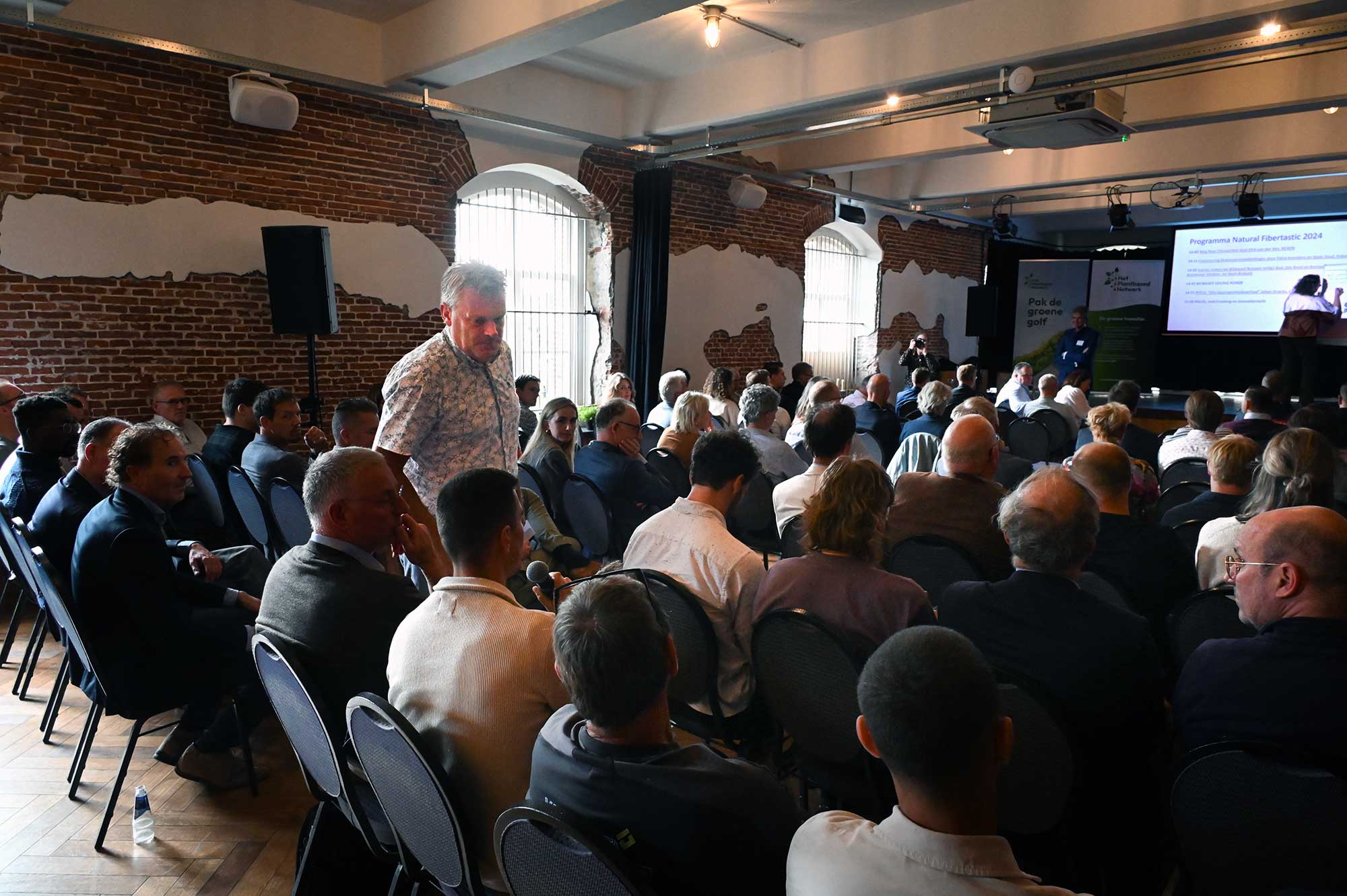
It was reflected in the number of participants at this edition of Natural Fibertastic. At the Innovation Market, companies crowded together to present the latest biobased products they are now marketing. And in the conference room, not a seat remained vacant.
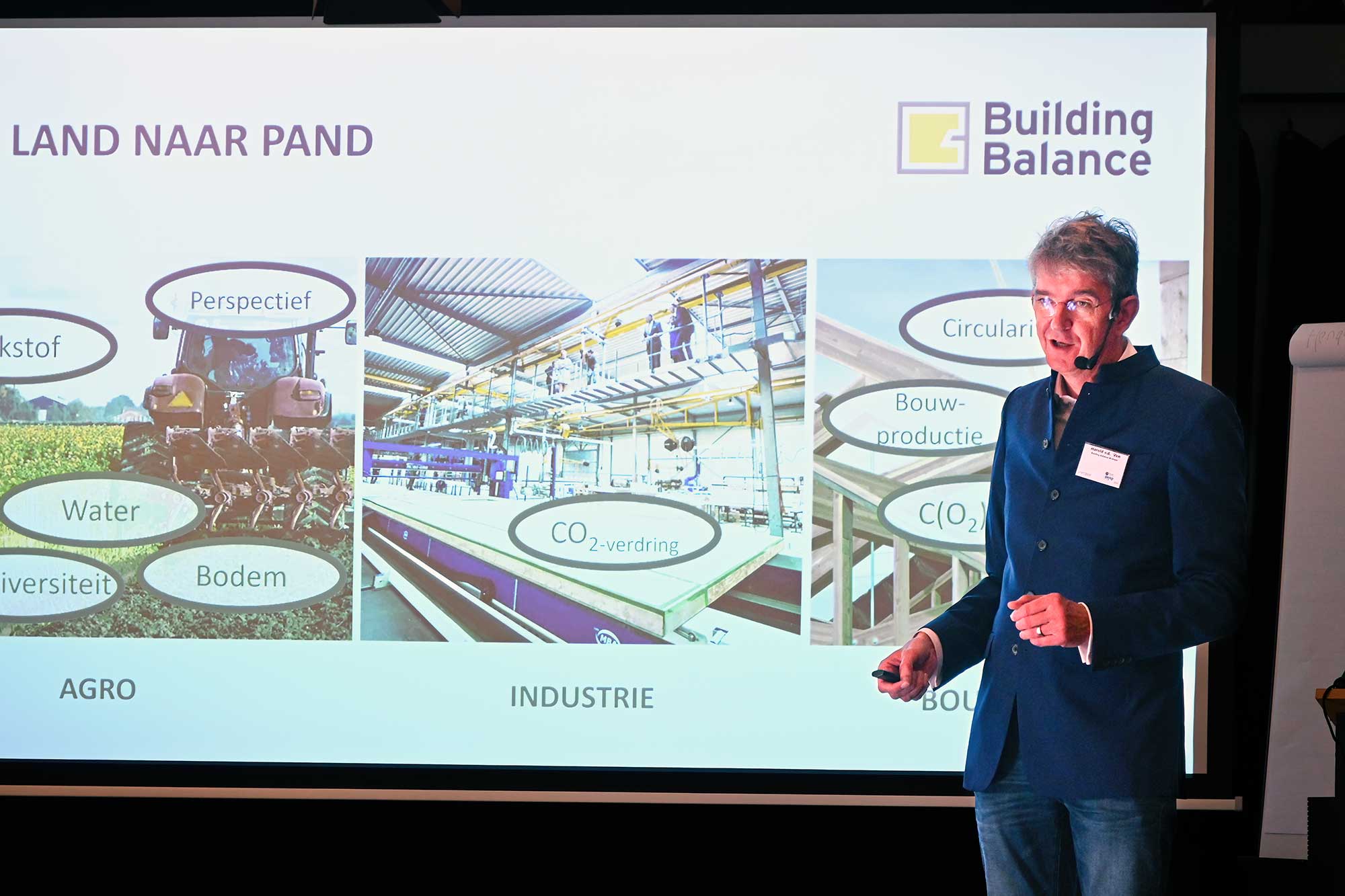
The theme of this edition was: Circular biobased building is a joint endeavour. Chairman of the day Harold van de Ven, former architect and chain director of Building Balance Brabant emphasised that the application of biobased and circular materials in construction is a no brainer. After all, the Dutch government’s ambition is to build 900,000 new homes. ‘’Building a house the way we have so far been accustomed to, releases an average of 40 to 60 tonnes of CO2 into the atmosphere. Multiply that by a million and we are flying completely out of control with our carbon emissions.’ The solution: biobased construction, where carbon is stored in the building materials.
To produce all those biobased building materials required for this, cooperation is needed in short, regional chains: ‘From plant to building’, including farmers, processors, government, financiers and builders.
Plastic in the soil
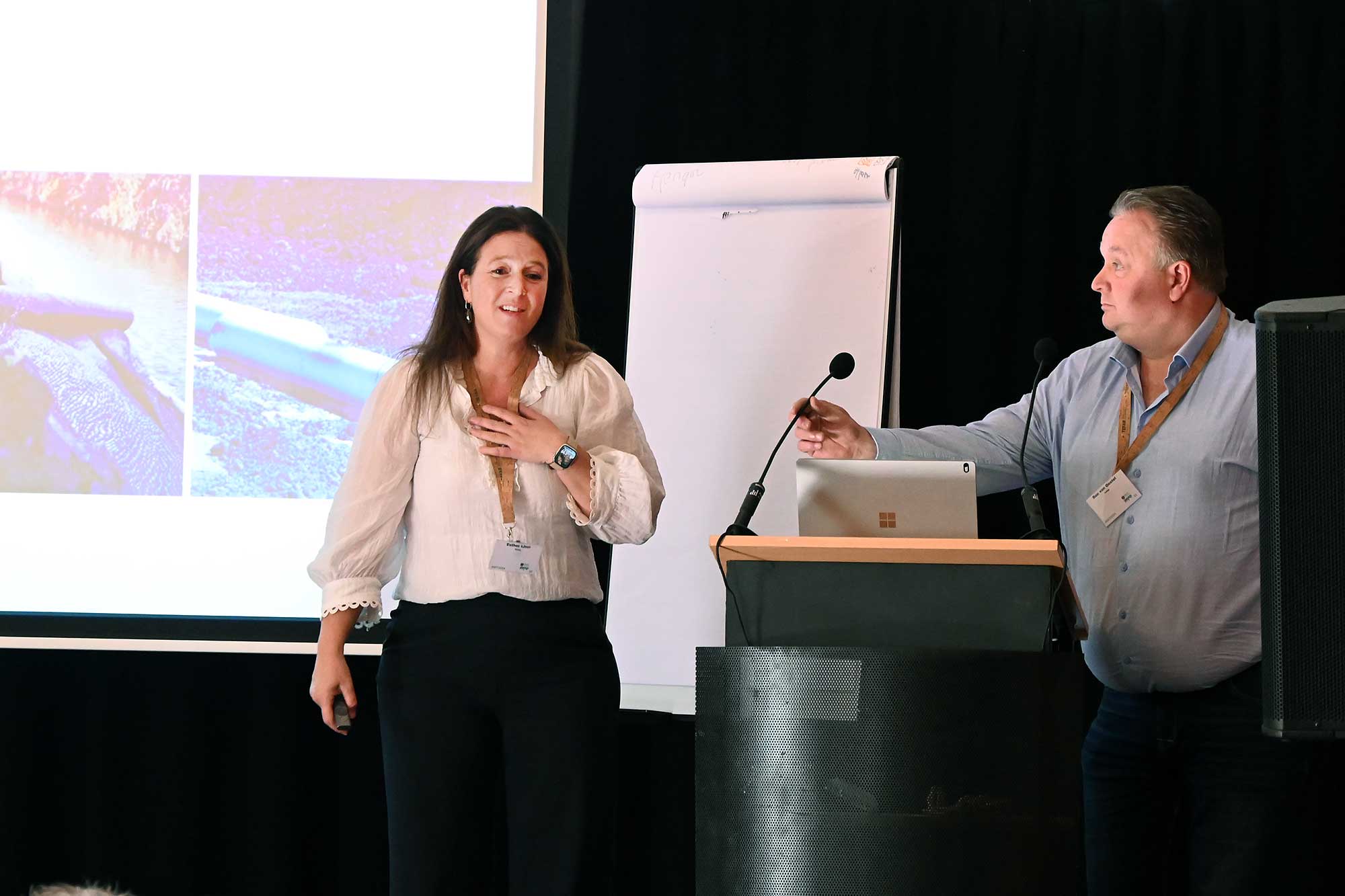
Esther IJzer and Ron van Gestel, owners of the company TEFAB (formerly TNF), talked about a lesser-known aspect of construction: anyone who puts a shovel in the ground in the Netherlands inexorably encounters plastics. This involves not only cables and pipes, but also geotextiles used to reinforce dykes, for example. TEFAB is developing biobased alternatives for these, based on jute and coconut fibres, among other things. They do note, however, that talking is not enough: concrete steps are needed, for instance in the field of legislation, allowing the application of these sustainable innovations.
Leon Joore, director of the Natural Fibre Application Centre, agrees that developing new materials is not sufficient. They must also actually be brought to market. Here, cooperation between several companies and governments is indispensable: regionally, but also on a European scale. Natural fibres can make an important contribution to sustainable building solutions, but this requires knowledge and understanding of the complexity of natural fibres and their behaviour under different conditions.
The NAC plays an important role in this. It develops fibre-based applications for the construction, infrastructure and packaging sectors. The centre also organises training courses and events, and it provides support for life cycle assessments (LCAs) and environmental cost indicator (MKI, in Dutch) calculations.
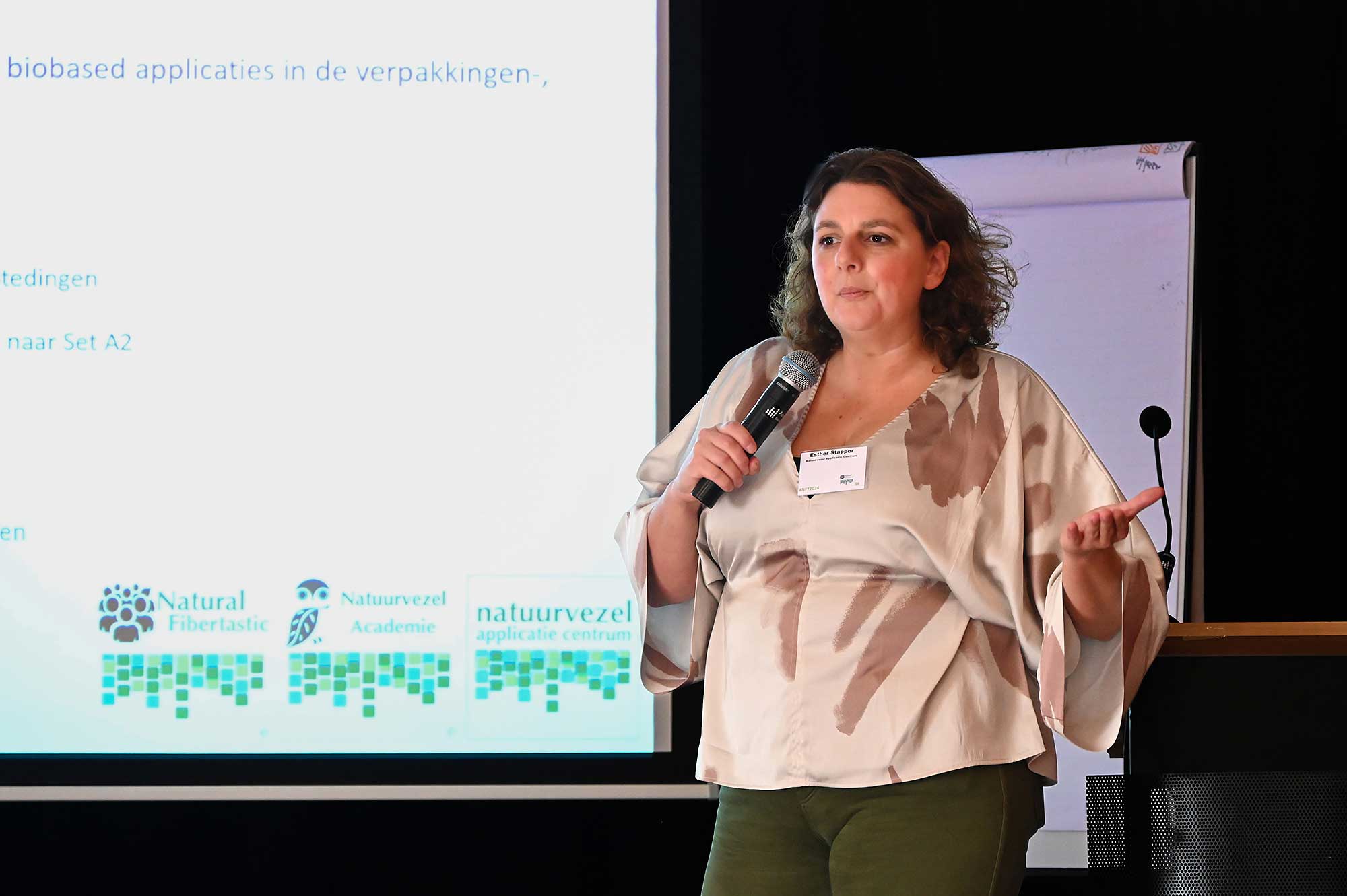
In sustainable procurement, the MKI is used to translate environmental costs into euros. Less sustainable solutions are then given a higher bonus, making more sustainable solutions more attractive to clients. Esther Stapper of the NAC warns that sustainability will become even more important next year, as the LCA calculation changes. Instead of 11 environmental impacts, 19 will then be included. ‘It is definitely something to consider when developing a product or a material. After all, it means that the same product could get a higher MKI value in the tender than it does today. Indeed, CO2 emissions and storage will soon be assessed more heavily, as will reusability and recyclability.’
Scaling up
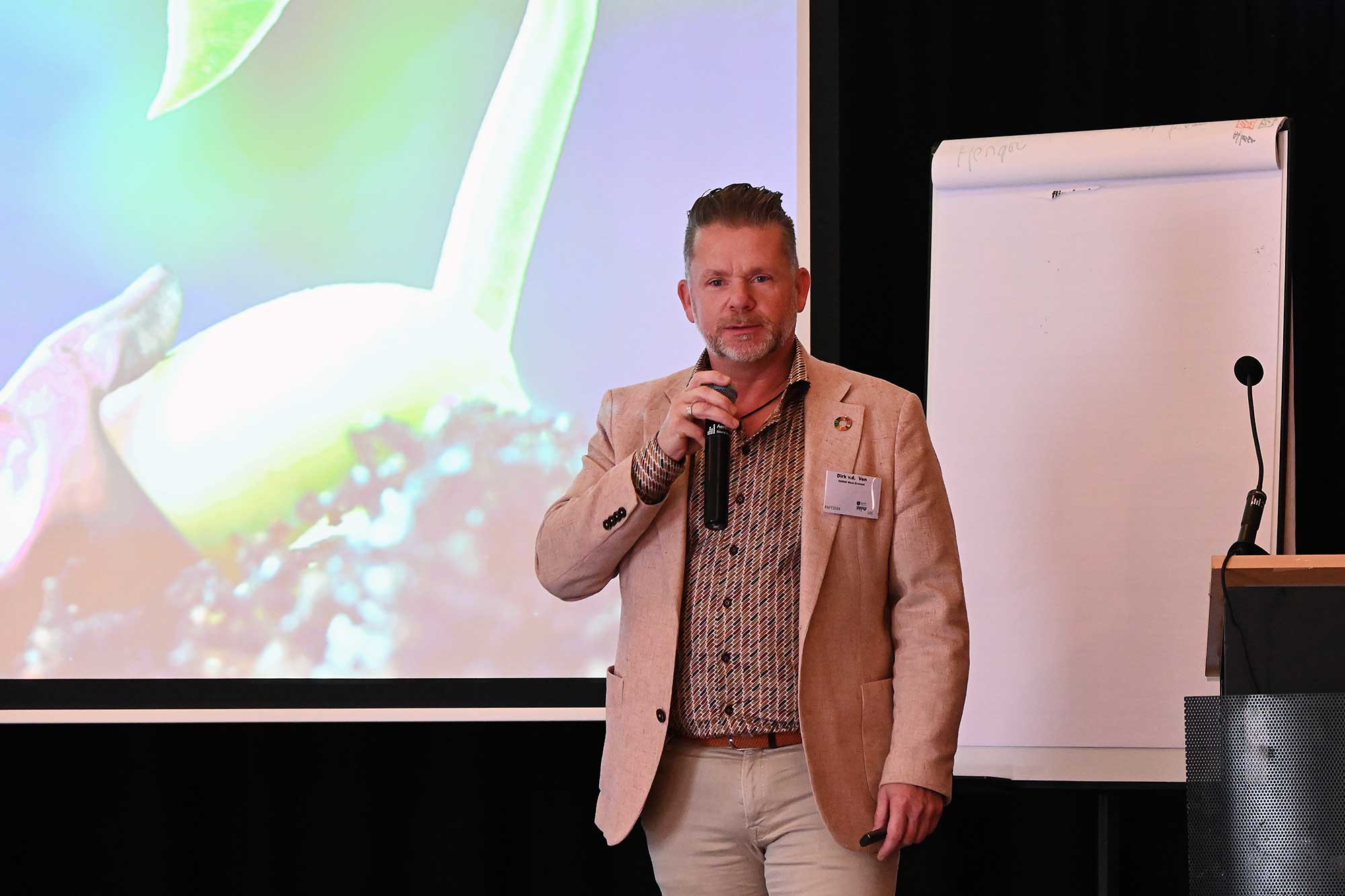
In his presentation, Dirk van der Ven, programme manager circular economy at West Brabant development company REWIN, discussed the importance of networking and new entrepreneurship. This is not just about profit. Things like inclusiveness, transparency and true pricing are also important.
Cooperation and knowledge sharing are also central to the ENZuid programme Circulair Bouwend in Zuid-Nederland, within which REWIN is programme leader for the theme ‘biobased building materials’. This includes initiatives to form innovation clusters around specific themes, including fibre processing for building materials. The West Brabant region is well positioned in this area, but: ‘Scaling up will have to go to a higher, cross-border level to make a real impact and make the transition to a circular economy successful.’
Funding
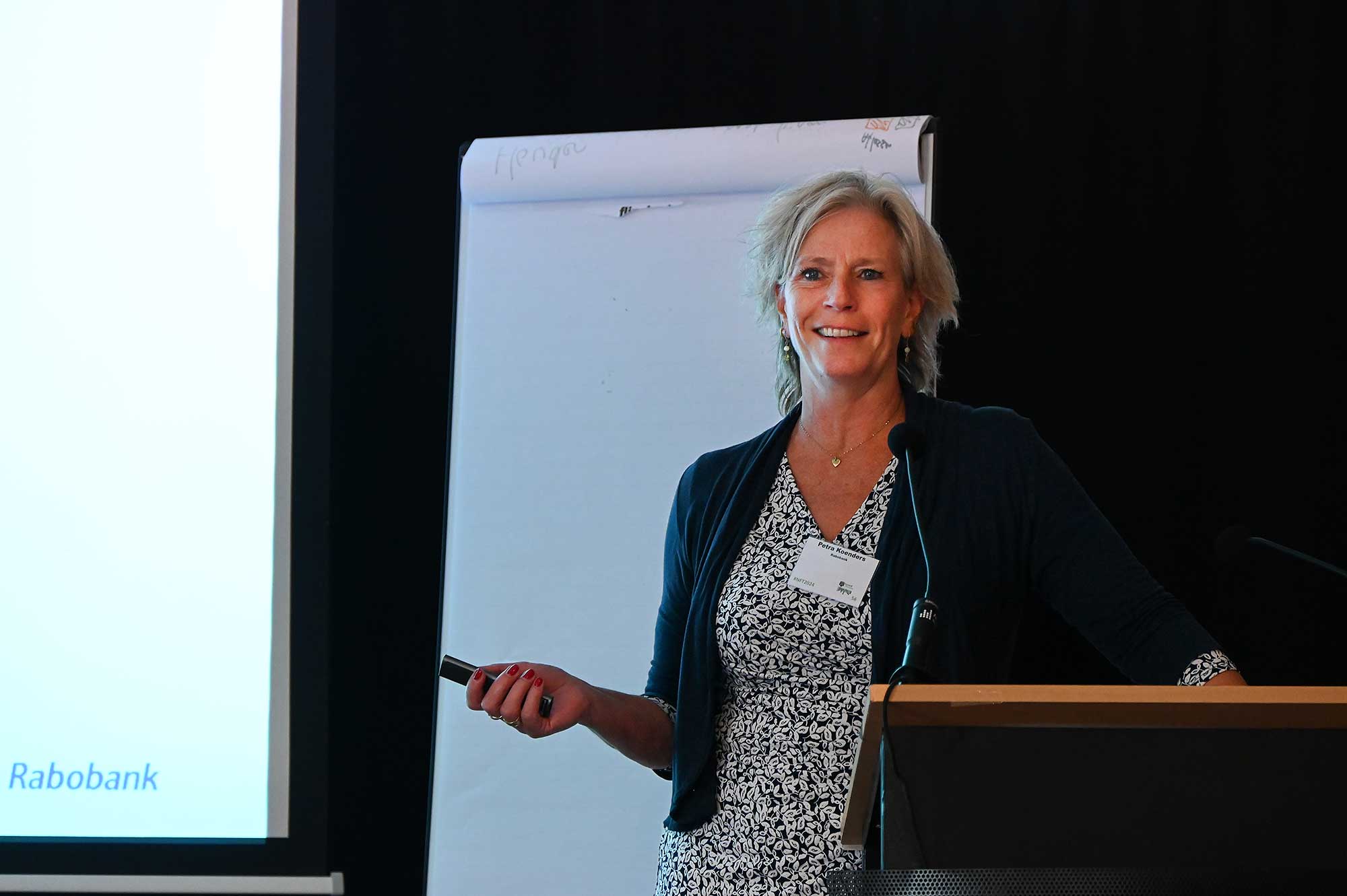
Petra Koenders and Sjaak Straal of the Rabobank elaborated on the importance this bank attaches to sustainability, according to its mission Growing a Better World Together. As former director of the Green Chemistry Campus, Petra knows the biobased transition up close and, within the bank, also propagates that investing in innovation projects in this field can really be worthwhile. The bank also provides venture capital to start-ups, trades in carbon credits and will soon launch a new biobased mortgage.
For entrepreneurs investing in green initiatives such as solar panels or an energy-neutral cold store, Rabobank also has a special scheme. Sjaak: ‘We refund 12.5% of the investment amount, with a maximum of €10,000. Especially for SME entrepreneurs, this is really interesting.’ Ultimately, the goal is still to meet the Paris climate agreements.
Fire safety
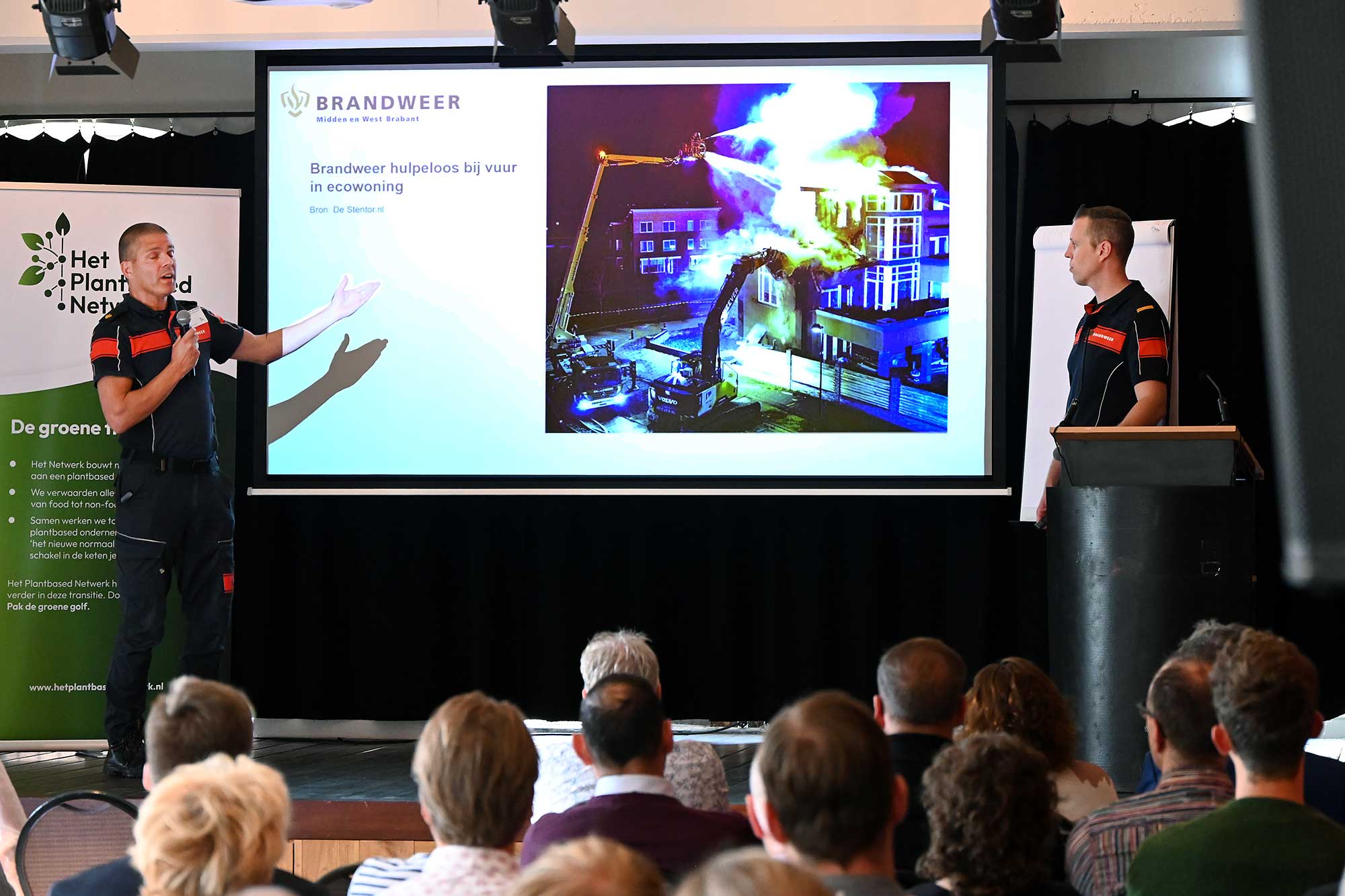
Municipalities often have questions about the fire safety of biobased materials when issuing building permits. Zeb Braal (risk management adviser) and Bertwin van Setten (safe living environment account holder) of the Central and West Brabant Fire Service also notice this. Bertwin explains how brick building became the standard after a city fire reduced many of Amsterdam’s wooden houses to ashes in the late Middle Ages. Now the trend is back to wood and other biobased materials, which in turn raises questions. A fierce fire in Kampen in 2018 in which a straw-insulated eco-home burned to the ground while the fire brigade could do nothing, has been a harsh wake-up call.
These days, the fire brigade would prefer to be involved in the development of biobased houses as early as possible, in order to give advice. ‘People think of the brigade mainly in terms of fire trucks. As soon as you see those, it’s too late,’ says Zeb. ‘We also have an advisory role and prefer to be at the front of the chain. If a sketch design is available, we like to sit down with the project developer, architect or builder. And we also want to stay involved further on in the project.’ That way, the fire brigade can provide optimal advice on fire prevention and mitigation, because both regulations and materials testing methods are not yet geared to all the new developments around biobased construction. 100% Fire safety will never be fully achievable, but timely cooperation and good planning can minimise the risks.
Auction
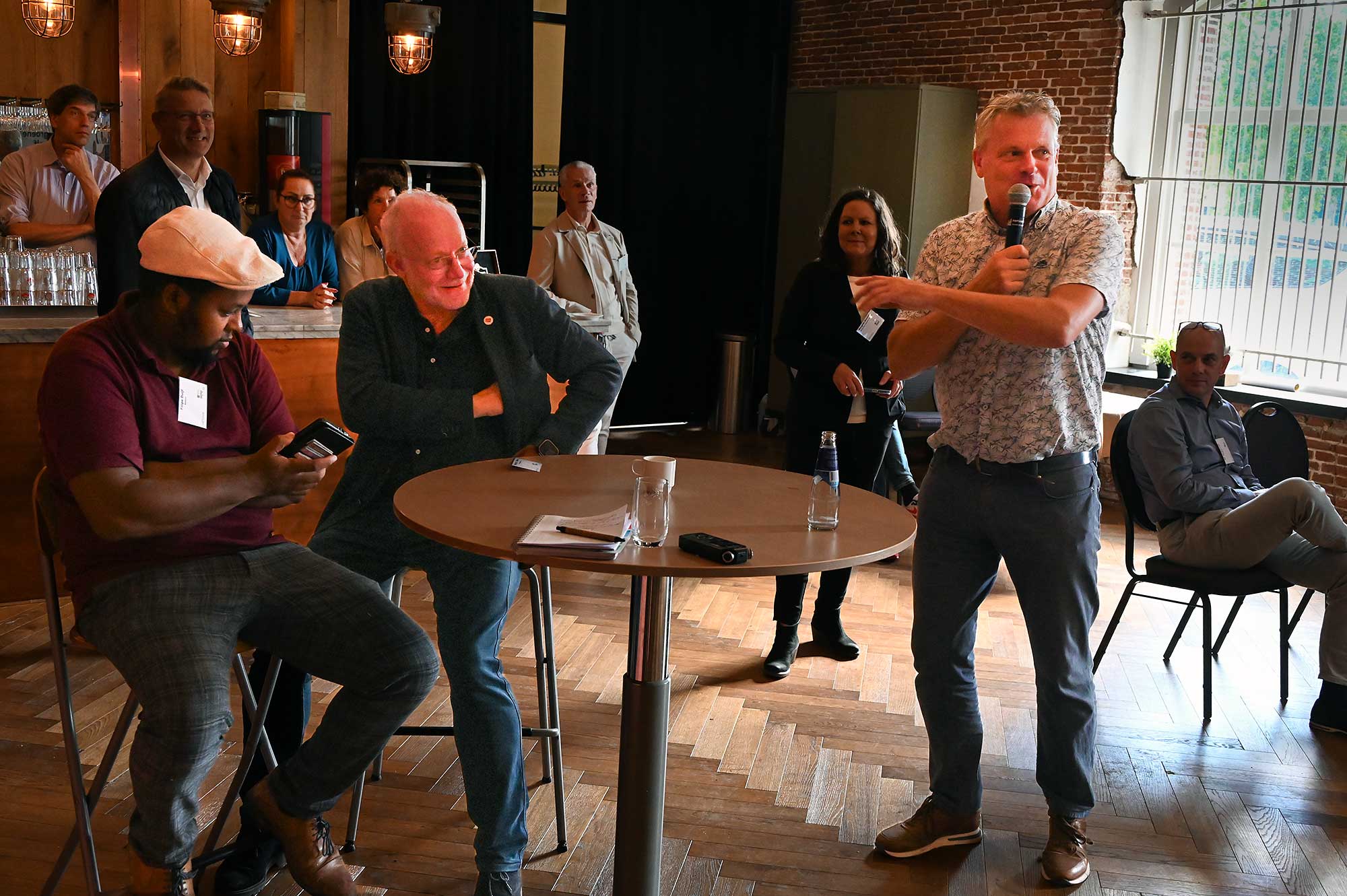
A successful regular feature of Natural Fibertastic each year is the so-called Biobased Auction, a low-threshold way of matchmaking where entrepreneurs can establish connections to help further the development of their product. One is looking for a supplier, another for a buyer and a third for a cooperation partner. Many fruitful collaborations were again born.
The auction round was followed by a number of presentations by companies competing for the prestigious Natural Fibertastic Award:
- Kim van Gogh of Heijmans construction company with an introduction of the Heijmans Horizon housing project;
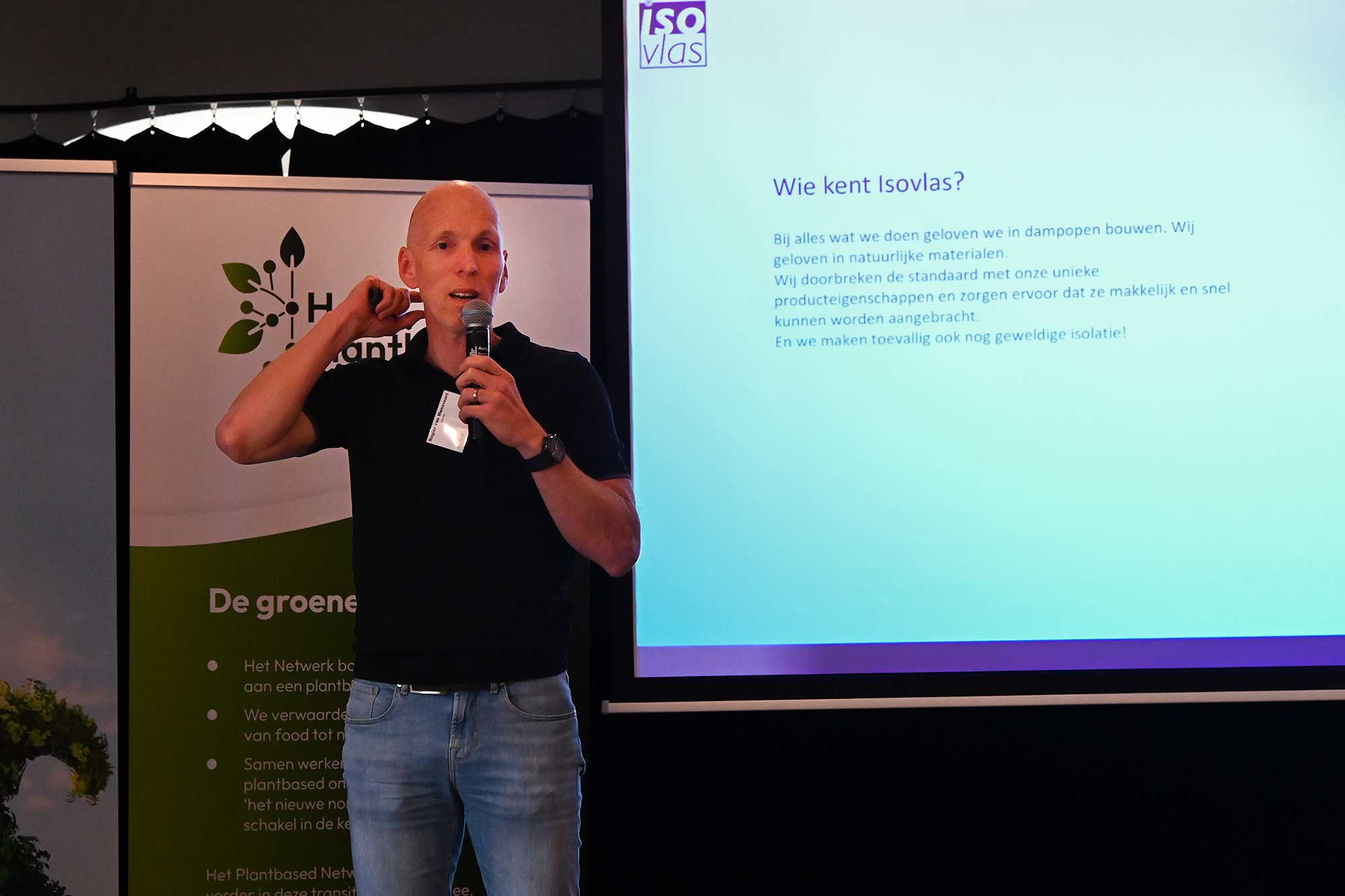
- Rogier van Mensvoort of Isovlas on projects involving flax insulation;
- Johan Strackx of Greenager+ on sustainable insulation and floor systems;
- Lenno Vermaas of Van de Bilt zaden en vlas on practical applications of flax and hemp;
- Leonne Cuppen of Yksi Connect and Paul Meijer of Rijkswaterstaat on equal collaboration in Fieldlab Nieuw Zwanenburg;
- Edwin Keijsers of Wageningen University & Research on bio-asphalt, in which lignin replaces part of the bitumen;
- Zacharie Flick of Miscancell, on Grasfalt, using lignin from elephant grass in asphalt;
- Faas Moonen of TU Eindhoven on experiences with biobased bridges.
00Winner of the NFT 2024 Award was Greenager+, the company of Flemish entrepreneur Johan Strackx. Greenager+ produces a range of building materials, including insulation, screeds and mortars. They use natural materials, such as lime and biobased binders, complemented by innovative applications of residues and the natural fibres miscanthus and hemp.
Want to know more about natural fibres and biobased construction? Check out the website of the Natural Fibre Application Centre.