According to Exxon, new draft European Union rules are the reason for this decision. The rules would disadvantage plants that combine waste recycling with fossil feedstocks. Exxon argues that this approach penalises integrated facilities, as their plants would receive less than half of the official ‘credits’ for recycled material.
Exxon also voiced criticism of the Corporate Sustainability Due Diligence Directive (CSDDD), another EU measure that makes companies accountable for environmental and human rights issues in their supply chains. The company has described the law as “complex, bureaucratic and unworkable.”
Exit strategy
Earlier this month, the Financial Times reported that ExxonMobil is also considering the sale of its chemical plants in Belgium and the United Kingdom. These include a site in Fife, Scotland, and two plants alongside the large refinery and petrochemical complex in the port of Antwerp. A sale could raise up to $1 billion. The Belgian union General Federation of Belgian Labour (ABVV) described the move as a “European exit strategy.” Exxon itself declined to comment on the reports.
The European chemical sector is grappling with a prolonged downturn caused by overcapacity, weak demand and competition from low-cost Chinese rivals. Planned US tariffs on chemical imports from Europe are adding further pressure. Competitor LyondellBasell has already sold parts of its European operations, while Saudi Arabia’s Sabic is onsidering similar steps. Shell earlier this month abandoned construction of a biofuels plant in Rotterdam.
Boosting competitiveness
Last summer the European Commission presented an Action Plan to boost modernisation and competitiveness in the chemicals sector. Key priorities include reducing energy costs, stimulating innovation, promoting sustainability and easing regulatory burdens. According to industry leaders, however, the response is too cautious, too complex and too slow. They fear Europe’s chemical industry – once a global leader – is now sliding into decline.
The European Chemical Industry Council (Cefic) stresses the urgent need for a rapid, collective response to restore the sector’s competitiveness and resilience, warning: “Without the European chemical industry there is no strategic autonomy, no climate neutrality, no energy transition and no clean tech transformation.”
Read more at Belga News Agency, Financial Times and Bloomberg.
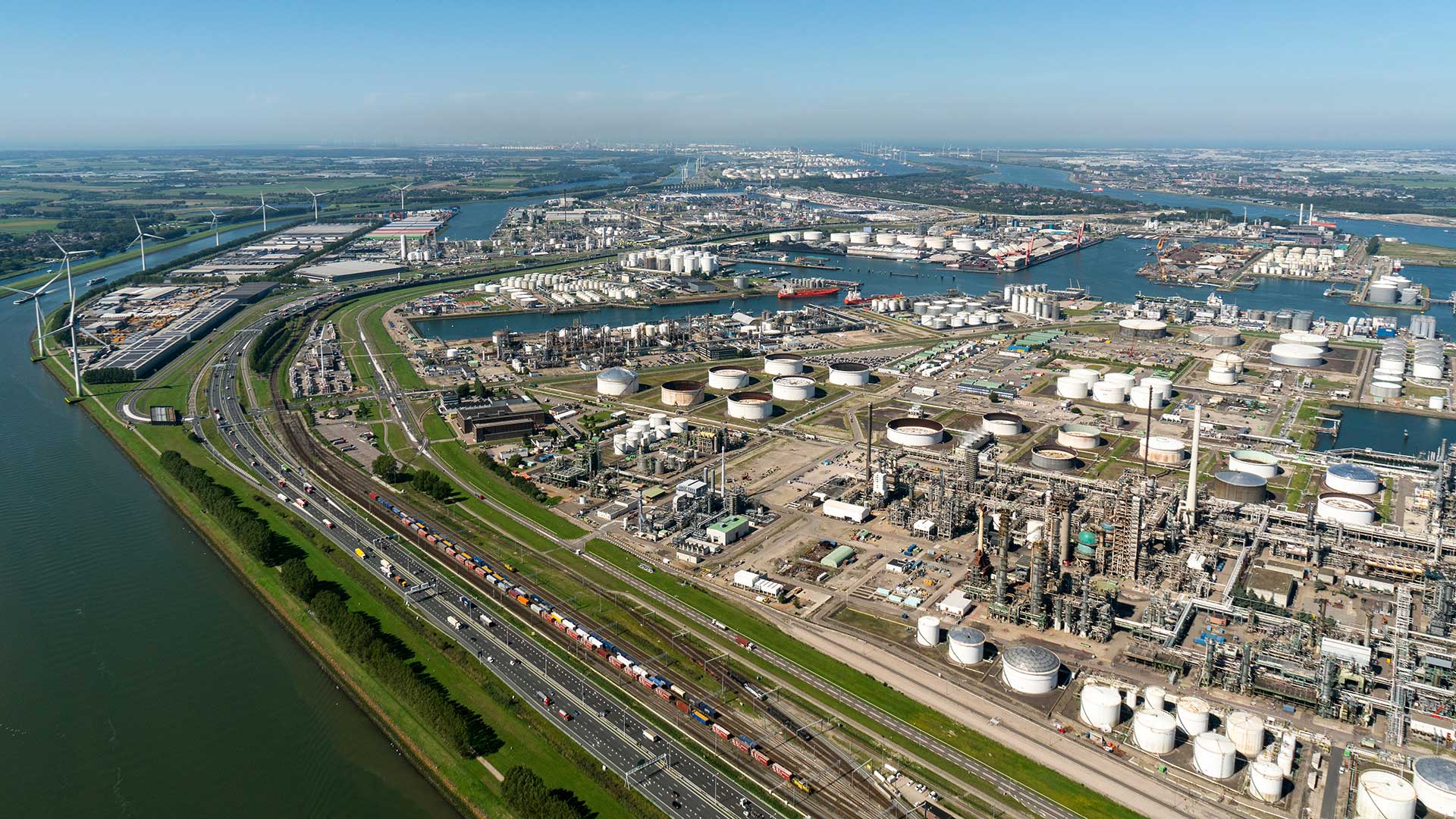
Image: aerial view of the Exxonmobil refinery and Nouryon Polymer Chemicals, Port of Rotterdam (Aerovista Luchtfotografie/Shutterstock)


