Carrez puts his finger right on the spot. Globally, the bioplastics market is growing at an impressive 13 per cent per year. ‘That is much faster than the fossil market, which is stuck at 3 per cent,’ said Michael Carus of the nova-Institut (Germany) during the webinar. Demand is increasing, the technology is there. But in Europe, the momentum is lacking.”
Why is that? Carus: “Countries such as India and the United Arab Emirates are showing political audacity. They explicitly allow bioplastics in packaging, thereby creating demand – and thus investment. Europe lacks this boldness. Without clear regulations, the market will remain marginal. Europe needs quotas for biobased raw materials, just as it does for recycling. Only then will the certainty that investors need be created.”
The promise of PEF

According to Carus, so-called “dedicated bioplastics” (such as PEF, PHA and PLGA) are essential for innovation. These are not biobased versions of existing plastics, but materials with their own chemistry and properties. They offer new opportunities and advantages, but their market introduction is also more complex. For example, the validation of new plastics is often incomplete, and margins are thin in a global market where overproduction of fossil-based plastics is driving down prices.
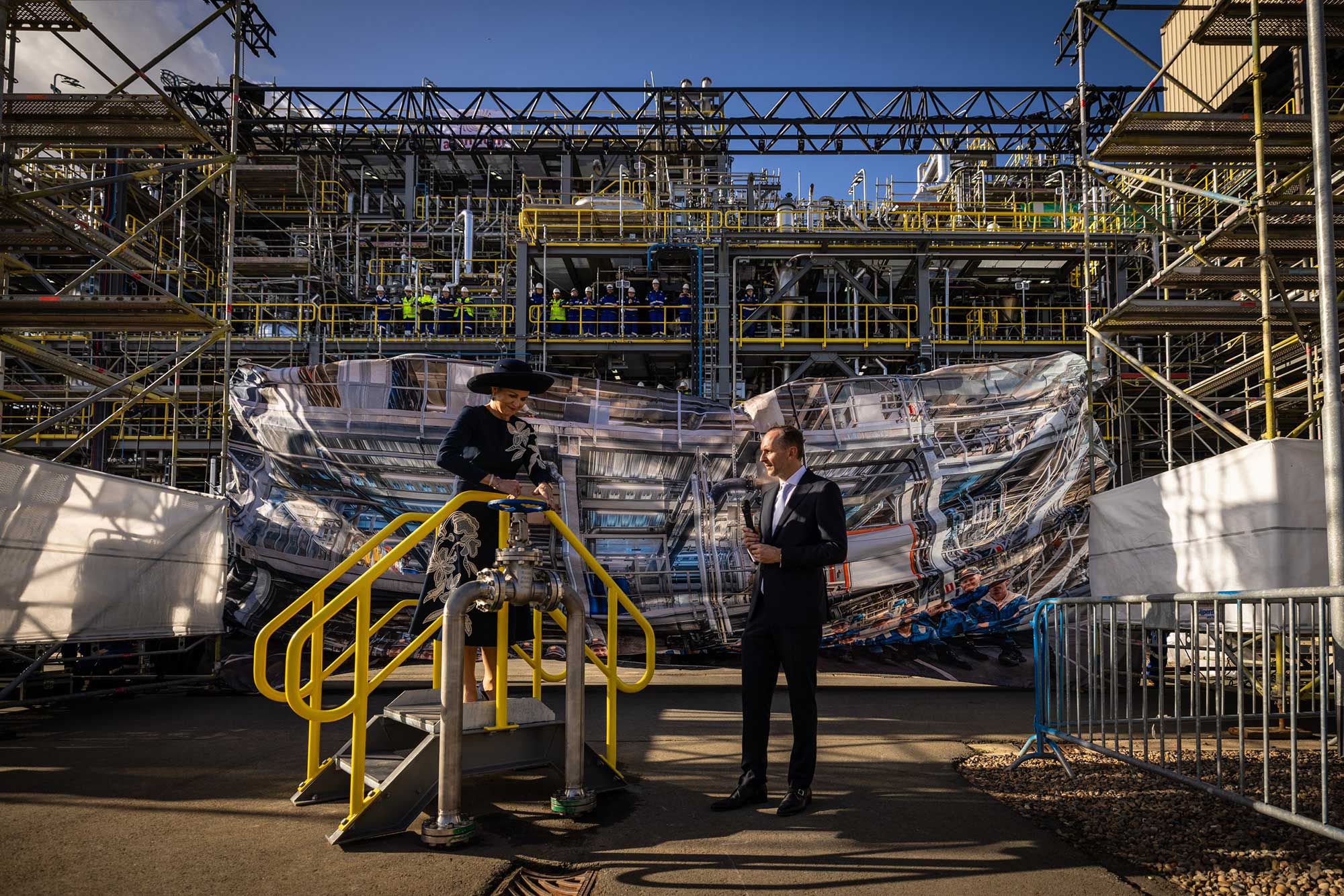
Nevertheless, the green chemistry company Avantium (Netherlands) has succeeded in building a commercial flagship plant for PEF (polyethylene furanoate) in Delfzijl, in the Northern Netherlands. PEF is one of the most promising new biobased plastics, a direct replacement for the widely used fossil-based PET.

Crucial to the realisation of this plant was the PEFerence project, funded by CBE JU, the joint undertaking of BIC and the European Commission. ‘Support for higher TRL projects from Europe such as this is indispensable in gaining the confidence of new investors and partners,’ says Ed de Jong, Vice President of Development at Avantium. He is referring to the “second valley of death” where promising innovations all too often fail: raising capital becomes difficult as soon as large, risky investments are needed to make the transition to commercial production. Public funding such as that provided by CBE JU can then be just enough to convince investors.
Major brands including the PEFerence partners Henkel, Carlsberg and LVMH (Louis Vuitton Moët Hennessy) certainly recognise the potential. In recent years, Avantium has signed 20 off-take agreements (5 kilotonnes). ‘To reduce costs, we need to scale up further,’ says De Jong. ‘That’s why we are working on selling technology licenses to partners worldwide, enabling them to build licensed facilities that can be twenty times larger.’
As an example, Avantium has recently formed a European consortium with Tereos and LVMH, which will expand with additional partners, with the intention to build and operate the first industrial-scale facility in Europe under an Avantium technology license.
From CO₂ to new polymers

Meanwhile, Avantium is looking beyond PEF. In the new CBE JU-funded HICCUPS project, the company is working on the development of PLGA from CO₂ using electrochemistry. This polymer is already known in the medical sector, for example in dissolvable sutures. Avantium also wants to apply it in packaging. ‘The material has excellent barrier properties and is fully recyclable and biodegradable,’ says Yap Chie Cheung, Managing Director of Volta at Avantium. ‘We will first focus on the multilayer packaging market, where we want to replace fossil oxygen barriers with a sustainable, CO₂-negative solution when renewable electricity is used. Also, with an electrochemical process we can produce high purity product with minimal waste streams.’
Innovations like these require enormous investments. The success of projects such as HICCUPS or PEFerence depends on public support. However, De Jong emphasises that in Europe it is much easier to obtain subsidies for fundamental research than for scaling up. ‘There is an urgent need for financial instruments for the step from pilot to demo and flagship.’
Smart materials
More pioneers are encountering this reality. At Bio-mi in Croatia, Filip Miketa has been working on the development of certified biobased and compostable thermoplastics for more than ten years. His company is the first in South-East Europe to produce fully certified bioplastics and combines this with intensive participation in European projects such POLYMEER, FURIOUS, ELLIPSE and others.

‘We develop intelligent materials from unimaginable sources,’ says Miketa. ‘These can range from rice husks and brewery waste to chicken feathers, tomato seeds, or CO₂. The aim is to replace fossil-based plastics with biobased alternatives that offer comparable performance but have a much lower ecological footprint.’ Here too, scaling up is the biggest bottleneck. ‘With limited availability of test material, it is difficult to assess all processing parameters. You can only really validate materials when you have tens or hundreds of kilograms.’
He also points to the lack of regulation and market incentives. ‘We are competing with fossil-based materials that are twice as cheap,’ he says. ‘A kilo of polyethylene costs between 1.0 – 1.2 euros; a bioplastic easily costs twice as much. Without support from the European Commission, we cannot close that gap. Perhaps import tariffs should be imposed on fossil-based plastics, as is already the case with steel.’
Nevertheless, Miketa is optimistic about the future. ‘CBE JU projects not only provide us with financial support, but they also bring together partners from across the value chain. We learn from each other, develop together, and demonstrate what is technically and economically possible. Only in this way can we move from the laboratory to the market.’
Bio-mi’s long-term goal is clear: ‘We want to demonstrate that biobased plastics are not just a Western European story. We want to become a serious link in European value chains. With better materials, cleaner soils and products that are truly green — not just in name.’
Turning point
For the moment, European regulations are acting as both a brake and a catalyst. According to Julie Pieters, EU Policy Affairs Manager at European Bioplastics (EUBP), the new Packaging and Packaging Waste Regulation (PPWR) is an important turning point. For the first time, European legislation explicitly refers to biobased content.

‘Article 8 of the PPWR is actually the first real legal cornerstone for bioplastics,’ she explains. ‘The Commission is obliged to propose targets for biobased raw materials in plastic packaging, based on a technological and environmental assessment which will be done by 2028 at the latest. That may seem a long way off, but it is a clear signal that bioplastics are going to become part of European policy.’
She believes such a step could be a game changer. ‘About half of the market for bioplastics is in packaging. If quotas or minimum levels for biobased content are introduced, it will finally give companies the certainty they need to invest. That is exactly what we are missing now.’
Compostability will also be given formal status in the PPWR, beyond an end-of-life route. From 2028, it will even become a product requirement for specific applications, such as tea bags, coffee pads and fruit and vegetable stickers. Member States may and should extend this obligation to other applications, provided they have the appropriate infrastructure in place.
Italy is leading the way in this regard. “The EPR system (Extended Producer Responsibility) works very well there: composters receive compensation for processing compostable packaging and can therefore apply the full composting period of twelve weeks. In other countries, processors want to run faster because they are paid per tonne of input. This makes it more difficult to process compostable plastics properly.”
Pieters sees the first signs of change, as more Member States actively incorporate biobased solutions into their waste policies. This is accompanied by a growing recognition that bioplastics contribute to the defossilisation of the economy. But what Europe needs most now is coherence and implementation power. ‘We have wonderful objectives in strategies such as the Bioeconomy Strategy and the Green Deal, but implementation remains fragmented. Sometimes I think that a bottom-up approach — with local pilots and clear examples — yields more than large top-down plans. The technology is there. Now it is time for it to be put into practice.’
Cooperation as the key
Both companies and policymakers emphasise that cooperation is crucial. ‘No one can make the circular transition alone,’ says Filip Miketa. ‘CBE JU is a fantastic catalyst because it not only provides funding but also connects partners who together cover the entire value chain.’
Julie Pieters agrees: ‘We need clear standards, fair CO₂ pricing and investment security. Only then can we move from pilots to industrial production.’
Ed de Jong adds: ‘Europe is good at innovation, but bad at commercialisation. We need to turn new ideas into new business, otherwise we will lag behind Asia and the Middle East. Now is the time to act.’
The technology is there, demand is growing, and the urgency is great. But the road to a circular packaging sector remains steep. Without clear policy choices, financial instruments and public-private partnerships, the European bioplastics industry remains a promise. However, with the right mix of innovation, regulation and daring, it can grow into what Carrez summarised during the BIC webinar as the next logical step: ‘From niche to mainstream – that’s where biobased packaging belongs.’ The coming years will show whether Europe has the courage to take that step.
This article was produced in collaboration with the Bio-based Industries Consortium (BIC).
Image above: Parilov/Shutterstock
 ‘Normally, these streams are incinerated or landfilled,’ says researcher Sofiya Vynnytska. ‘We first ferment them into volatile fatty acids, which the bacteria convert into PHBV, a copolymer that is more flexible than pure PHB and therefore suitable for a wide range of applications, from agricultural film to bottles and barrier coatings.’