
In 2023, Biobased Circular was promised a total of €338 million from the National Growth Fund. Of this, €102 million was definitively allocated for the first phase, from 2024 to 2026. The remaining €236 million was conditionally earmarked for the period from 2027 to mid-2032. In this second phase, demonstration plants were to be built and successful technologies scaled up to industrial production.
The government is now following the negative recommendation of an independent advisory committee. Ongoing projects and existing subsidy schemes will remain in place in 2026, but no Growth Fund money will be made available for the subsequent phase.
The committee endorses the importance of making the chemical industry more sustainable, but considers the decision to focus on Biobased polyesters to be insufficiently substantiated. In its view, there is still too little certainty regarding future markets, commercial scaling up and supportive European policy. Furthermore, the programme is said to be structured too heavily around technology development, and major industrial players are reportedly under-represented.
New industrial branch
Biobased Circular aims to establish a new industrial value chain in the Netherlands for plastics made not from petroleum but from renewable carbon sources. The programme focuses primarily on bio-polyesters for applications in packaging, textiles, coatings, resins, building materials and agriculture.
It connects companies from the agriculture, food, chemicals, plastics processing, recycling and consumer markets sectors with research institutions and financiers. According to the programme, around 140 companies are now involved in approximately 200 projects.
Biobased Circular states that biobased polyesters can make efficient use of raw materials and offer good opportunities for recycling. Certain variants can also degrade more quickly if they are accidentally released into the environment, thereby reducing the risk of long-term microplastic pollution.
One of the aims of the second phase was to establish eight demonstration plants by 2032. These plants were not an end in themselves, but an intermediate step towards full-scale commercial production.
Positive evaluation
The negative decision is at odds with the independent interim evaluation carried out by the research agency Technopolis at the end of 2025. That evaluation was intended to determine whether the progress made in the first phase provided sufficient grounds to fund the next phase.
Technopolis pointed out that, after less than two years, hardly any definitive economic or societal impacts could be expected. Many projects had only just begun. The evaluators therefore focused primarily on the organisation of the programme, the collaboration that had been established, the initial results and the likelihood that the intended impacts would be achieved at a later stage.
Their assessment was positive. The programme was deemed to be responding to a relevant transition for the Dutch chemicals sector and to be following an appropriate supply-chain-wide approach. It was also concluded that, with a relatively small organisation, a great many activities and collaborations had been set up in a short space of time. The evaluators saw no indications that Biobased Circular was off course. According to the evaluation, external uncertainties – such as lagging market demand and unclear regulations – did not make public support any less relevant, but rather more so.
Second ‘valley of death’
The debate surrounding Biobased Circular forms part of a broader European issue. The Bio-based Industries Consortium, the private partner within the European Circular Bio-based Europe Joint Undertaking, has long been warning of two so-called ‘valleys of death’ in the development of biobased technology.
The first arises during the transition from laboratory research to pilot and demonstration scale. Europe now has various research and innovation programmes in place to address this. The CBE JU and its predecessor, the BBI JU, have helped to bring new technologies, partnerships and value chains to the demonstration stage.
The second gap begins afterwards: during the transition from a successful demonstration to the first commercial plant. That step is much more capital-intensive. The sums involved are often no longer a matter of a few million euros, but of tens or hundreds of millions.
It is precisely for such first-of-a-kind facilities that funding is difficult to secure. Banks are faced with a technology lacking a long-term production history. Investors are uncertain whether the plant will perform technically and economically. Customers want certainty regarding price, quality and supply volumes before entering into long-term contracts. However, manufacturers can only offer that certainty once they have a plant in place.
This creates a stalemate: without a factory, there are no competitive volumes; but without guaranteed sales, there is no financing for the factory. BIC emphasises that the second ‘valley of death’ is not merely a matter of funding. Demand for biobased products must also be actively developed. Manufacturers of biobased products are competing with fossil-based materials, whose production chains have been optimised over decades. At the same time, the societal costs of fossil-based raw materials – such as climate damage and pollution – are still only partially factored into their price.
A combination of financial risk mitigation and demand stimulation is therefore required. Guarantees, loans, investment funds and support for the first commercial plants must be linked to measures such as sustainability criteria, public procurement, standardisation and mandatory quotas for renewable or recycled carbon. Without such market signals, investors will remain on the sidelines. A subsidy for a manufacturing plant is insufficient if there is no predictable market for its output. Conversely, demand stimulation has little effect if producers do not have sufficient capital to build production capacity.
Biobased Circular was set up largely to bring both sides together. The programme connects technology suppliers, raw material producers, processors, brand owners and potential customers. In doing so, it effectively constitutes a national response to the second ‘valley of death’ identified by BIC at European level.
Uncertainty as an argument
The Dutch National Growth Fund’s current criticism touches precisely on the characteristics of that scale-up gap. The committee cites insufficient certainty regarding upscaling, market development and supportive policy as reasons for discontinuing the funding.
From the perspective of Biobased Circular and BIC, these uncertainties are precisely the reason why public support is needed. It is difficult to expect complete market certainty in advance when a programme has been set up in part to develop that very market, production chain and investment base.
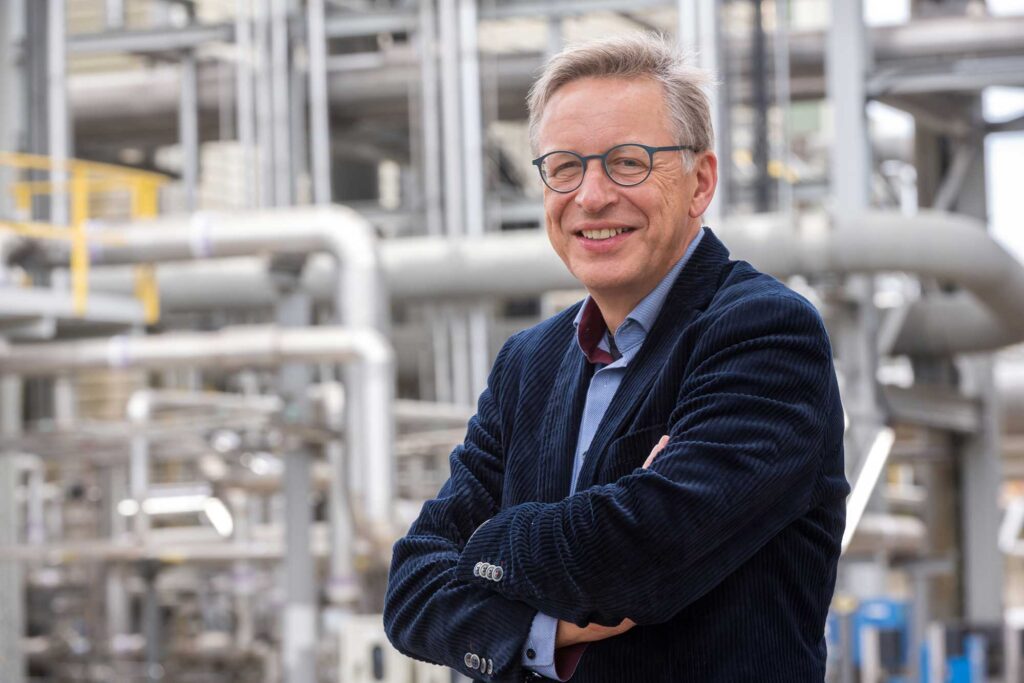
Arnold Stokking (Green Chemistry, New Economy) previously warned that it could take between five and twenty years before new biological feedstocks are available in industrial quantities. In his view, the National Growth Fund was one of the few instruments capable of helping technologies through the costly demonstration and scale-up phase.
Kees de Gooijer of TKI Agri & Food also emphasised at the launch of the programme that Biobased Circular was intended to quickly turn plans into concrete projects and accelerate progress towards a sustainable chemical industry.
Objective of the Growth Fund
The National Growth Fund was established to strengthen the Netherlands’ long-term sustainable earning capacity. The fund is specifically designed to invest in projects with significant social and economic benefits that do not materialise spontaneously due to high risks, long payback periods or market failure.
This decision therefore raises a fundamental question. When a programme is discontinued because the market and scaling up are still insufficiently certain, even though it was specifically intended to facilitate that market and scaling up, there is a risk that the assessment framework will undermine the original objective.
The discontinuation of Biobased Circular is more than just a financial setback for a single programme. It serves as a test case for the Netherlands’ willingness to actually guide new industrial value chains through the second valley of death. Without long-term public support for the scale-up of biofabrication, there is a real risk that the knowledge, partnerships and willingness to invest that have been built up will be lost.
Looking ahead is difficult. But looking back can offer some clues. Some fifteen years ago, the Netherlands was at the forefront of semiconductor technology, but due to a lack of industrial policy, efforts to sufficiently scale up the production of solar panels failed. As a result, billions in revenue-generating capacity were lost to markets outside Europe. China is now the global market leader in this sector. Is history set to repeat itself?
Image: Cinemanikor/Shutterstock


