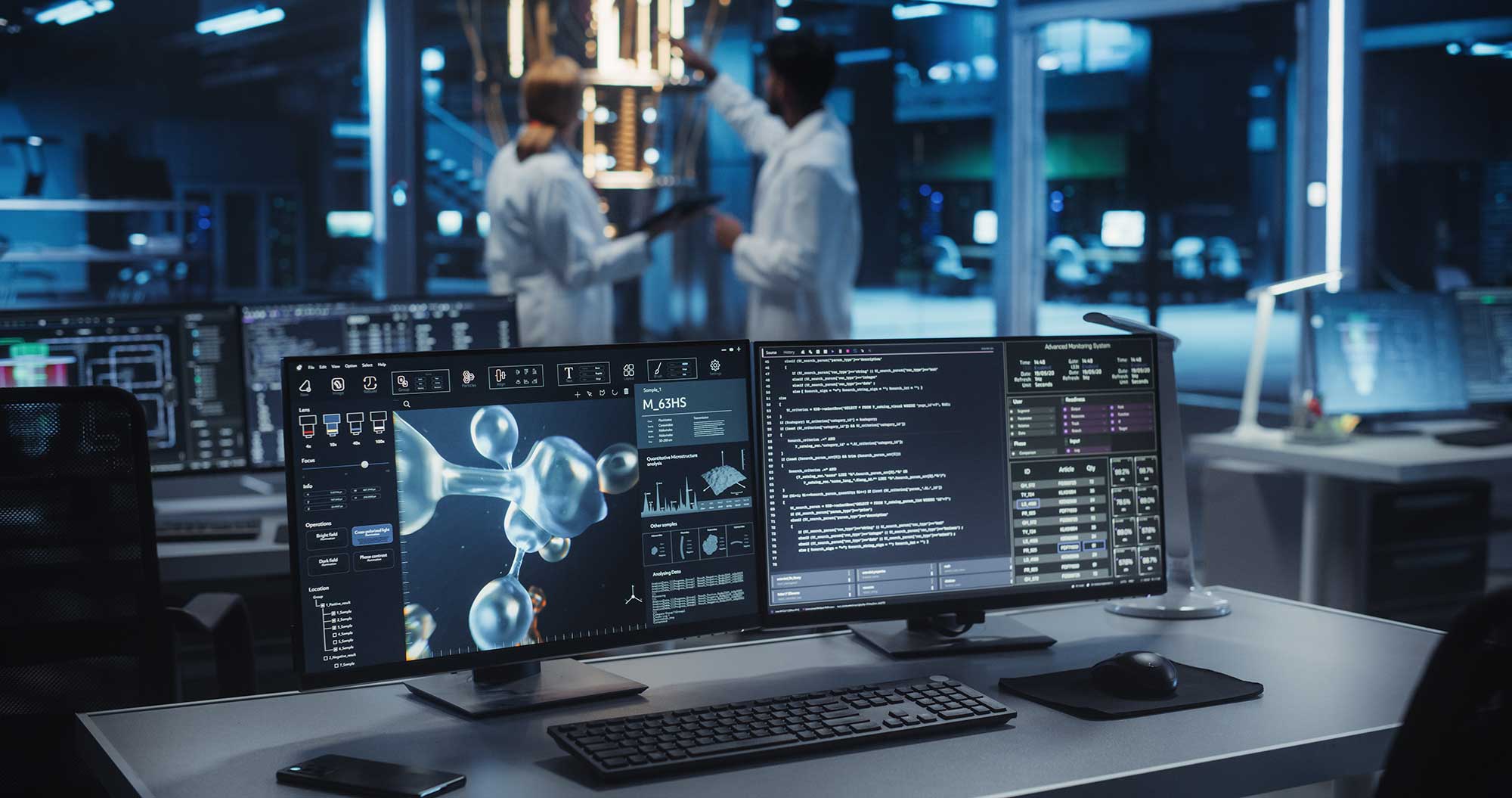
In the upcoming MNEXT Lunch & Learn, Dr. Mateus Xavier Silva, postdoctoral researcher at the Federal University of Ouro Preto in Brazil, will introduce participants to the power of computational chemistry in materials research. He will show how digital modelling supports the design of advanced materials and pharmaceuticals, explain why polynitrogen compounds are promising high-energy materials, and demonstrate how cellulose-based biosorbents can be tailored to remove metal ions from water.
This online session offers valuable insights for researchers, professionals and students interested in sustainable materials, clean water technologies and next-generation energy solutions. Participants will gain a deeper understanding of digital tools that enable scientific exploration beyond what is possible in physical laboratories alone.
The MNEXT Lunch & Learn series takes place monthly and highlights emerging topics in the Materials and Energy Transition. This session is tailored to an intermediate knowledge level.
See the agenda for additional information and registration options.
Image: Gorodenkoff/Shutterstock